
2006 Airman of the Year
winner
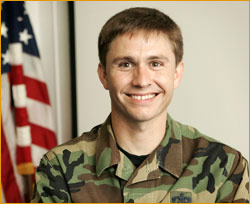
Tech Sergeant Shane Hobrecht
Born on the Colville Indian Reservation in Omak, Wash. Played forward for the Oklahoma City Stampede, a semipro soccer team, from 1991 to 1993. Hobbies include cooking and trout fishing.
WURZBURG ARMY INSTALLATION, Germany - When U.S. troops foil a plot to harm the homeland or interests abroad, details about their heroics often stay mostly under wraps. That's the nature of special operations.
Consequently, the highlight reels don't usually contain stories that showcase the exploits of airmen like Tech. Sgt. Shane Hobrecht. But when such stories are told, they illuminate the lengths to which special operations forces go in their effort to thwart terrorists, and the moral character necessary to carry out the fight with nothing less than total confidence.
As a joint terminal attack controller, or JTAC, Hobrecht serves as the conduit between an Army commander on the ground and, for example, an F-16 pilot waiting aloft for the order to zero in on a target and destroy it.
Members of his command, noting the clear risks associated with calling in an airstrike on a location while sometimes standing not too far away, have said no one in the Air Force does it better than he.
These special forces teams aren't "playing a video game," said Lt. Col. Lee Marsh, commander of Hobrecht's unit, the 2nd Air Support Operations Squadron, with headquarters at the Army post in Wurzburg, Germany.
"They know when to go subtle, they know when to go hard, they know when to back off," Marsh said. "This job requires highly adaptive, highly motivated and highly intelligent individuals, and he fits into that [special ops] world perfectly."
Case in point: Late last year, Hobrecht was among the elite U.S. troops who undertook two simultaneous raids and nabbed a cadre of would-be suicide bombers en route to the U.S. from a camp in the Middle East.
Hobrecht was the primary JTAC for one raid, so he was in on the planning and execution of reconnaissance before and during the incident, as well as the air cover provided after it went down.
Saying it was all in a day's work seems like a trite summary of the intricate set of actions that may have saved an untold number of lives. But even Hobrecht struggles to put it succinctly.
"It's hard to differentiate the missions," he said. "They don't really come with a priority. It's kind of a repetitive thing. When you do get something bigger than everything else, it doesn't seem that different until you've done it."
Hobrecht's handiwork during a 2005 deployment to Iraq resulted in the death or capture of more than 130 enemy fighters, including a purported bomb-maker, following close-air support missions. In one instance, he physically ran down a guy trying to elude capture by ducking into a patch of tall grass growing in the Tigris River.
He's earned two Bronze Stars for his combat actions, but the praise heaped upon Hobrecht by his command stems also from his accomplishments off the battlefield.
For example, they laud him for designing the squadron's new operations center, which they say has revolutionized how JTACs throughout Europe train to control close-air support missions using forward observers hundreds of miles away.
Regarded as a role model to those learning the craft, Hobrecht, also a JTAC instructor and evaluator, was 16th Air Force's Outstanding Noncommissioned Officer of the Year for 2005. He has also visited orphanages in Poland and Iraq, and served as a volunteer for the Special Olympics.
Because the career field is small and JTACs work mostly outside the Air Force mainstream, Hobrecht said he hopes the exposure from this award attracts greater recognition for the know-how his team brings to the fight. The group, he says, matters more than the individual.
"I could kick back, put my feet up on the desk and say 'I'm Air Force Times' Airman of the Year,' but that's not what got me here," Hobrecht said. "I've got to keep grinding my teeth and doing the work that made me who I am."
2006 Sailor of the Year
notable
AD2 Tammy Zendzion
Aviation Machinist's Mate 2nd Class Tammy Zendzion, an E2/C2 engine and propeller mechanic, coordinates her base's Sexual Assault Victims Intervention program representatives and manages her department's CPR program. She has also organized events for local orphans.
2006 Sailor of the Year
notable
GM1 (SW) Brandon Curtis
Gunner's Mate 1st Class (SW) Brandon Curtis served as an anti-terrorism force protection/visit, board, search and seizure team leader, training more than 1,500 sailors. As education service officer, his efforts have led to more than two-thirds of the ATG participating in degree programs.
2006 Sailor of the Year
notable
MC1 (SW/AW) Curtis Campbell
On April 24, 2004, Carlton, an engine man, was injured during a maritime intercept when a dhow exploded near a major offshore Iraqi oil terminal. After months of recuperation, Carlton re-enlisted for three more years in October 2004.
2006 Sailor of the Year
honorable
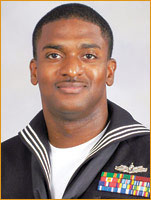
IT3 Kahlil Smith
It didn't take long for Information Systems Technician 3rd Class Kahlil Smith to make a positive impact when he reported for duty last year at Combat Direction System Activity in Dam Neck, Va.
Right away, he helped turn around problems with the new Defense Messaging System, and his efforts immediately improved the command's productivity.
While immersing himself in fixing the DMS problems, Smith began tackling his position as assistant command fitness leader. His efforts and leadership - Smith had the third-highest PRT score in the command - was instrumental in improving the overall fitness of the command.
Smith also volunteered to coach multiple Special Olympics teams in Virginia Beach, exemplifying the Navy's core values to his community.
2006 Sailor of the Year
honorable
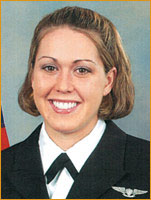
AO2 (SW) Nikki Reiter
Aviation Ordnanceman 2nd Class (SW) Nikki Reiter showed responsibility, initiative and an ability to teach others that befits a sailor far more senior; she made AO2 in the spring 2006 advancement cycle.
As an ordnance flight line and flight deck coordinator with Strike Fighter Squadron 32, Reiter was behind the transition of an inexperienced ordnance crew to a sharp, focused unit. In combat during Operation Iraqi Freedom, Reiter helped with nine successful precision strikes.
Her efforts resulted in her earning VFA 32's Super Swordsman of the Year 2005 - an award usually given to more seasoned petty officers. She's also developed a reputation as a motivated teacher, preparing her shipmates for both warfare qualification and ratings exams.
2006 Sailor of the Year
winner
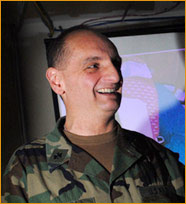
Cmdr. Louis Tripoli
BETHESDA, Md. - Cmdr. Louis Tripoli knew that civilians injured in the November 2004 battle of Fallujah, Iraq, would die if they didn't get medical care before the shooting stopped.
So as Marines and insurgents battled from street to street, he flew into the city to help reopen its main hospital. When he found that the hospital did not have enough medical supplies to treat the wounded, he arranged to have them shipped from abroad.
When a supply convoy was one corpsman short, Tripoli volunteered to travel with it - a position that Navy doctors were not obligated to fill.
And when he learned that an Iraqi infant would die if she did not receive medical treatment abroad, he created a system that saved the girl and dozens of other Iraqi children.
For these reasons, Tripoli is the Navy Times 2005 Sailor of the Year.
Tripoli, a Navy Reserve doctor who works as a medical officer for more than 300 prisons and jails in civilian life, credited months of training at various U.S. bases, including several days at a mock Iraqi city built on a former adult film lot, for giving him the confidence to perform well in a combat environment.
"The Navy and Marine Corps made me into somebody who was useful in a war," he said. "I didn't think I could do it, but they showed me how."
After Marines took control of Fallujah following the November 2004 battle, Tripoli and 24 other members of the Marine Corps' 4th Civil Affairs Group arrived in the city to find it plagued by poor public sanitation, outbreaks of rabies and hepatitis, a barely functioning electrical grid and a defunct local government.
"We found tons and tons of military ordnance," he said. "Before we got there, an Army doctor had been killed by incoming fire while talking on the phone to his dad. We took incoming fire every day."
The group, which included a former commercial airline pilot, a Naval War College instructor, an Egyptian-born Navy physician's assistant and an Army civil affairs officer, drew on a diverse set of skills to address the needs of Iraqi civilians - from properly caring for dead bodies to holding regular meetings with city leaders.
"I was there with the dream team," Tripoli said. "It was the right group of people at the right time … to solve these problems."
Their work extended beyond Fallujah.
In late 2004, Tripoli learned that an Iraqi man had been visiting the nearby American prison at Abu Ghraib daily for several weeks, asking U.S. troops to help his infant daughter, who had tumors growing in her neck. The tumors, while benign, were gradually cutting off her airway, and eventually would have suffocated her.
Iraqi doctors told Tripoli they were unable to perform surgery to remove the growths, and U.S. civil affairs officials told him of the bureaucratic hurdles involved in taking Iraqi citizens out of the country for medical treatment.
Tripoli was not deterred. He worked with State Department officials to get a visa for the girl to travel to South Carolina for treatment. He also found an American doctor who was willing to perform the surgery for free.
Tripoli's parents traveled to Jordan to pick up the girl. His father, a former Navy doctor, examined her there and found that she also suffered from a hole in her heart. The girl was taken to South Carolina, where she was treated successfully for both conditions.
Since then, Tripoli has spearheaded the creation of a system that would allow other Iraqi children to leave the country for treatment.
He said that system has allowed approximately 24 Iraqi children to receive medical treatment in the U.S., Turkey and other nations. It has since been expanded to allow Iraqi adults to seek medical treatment in other countries.
Tripoli is proud of his time in Iraq.
"It was something I would never trade," he said. "It was one of the most positive experiences of my life. I think it was worth it and it made the world a better place."
2006 Marine of the Year
notable
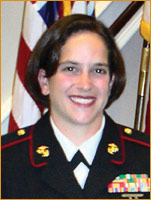
Sgt. Susannah Wood
When Reserve Sgt. Susannah Wood deployed to Asad, Iraq, the civilian budget analyst served outside her food service military occupational specialty as a Mortuary Affairs squad leader. Her peers say Wood "makes you proud to be in the same organization."
2006 Marine of the Year
notable
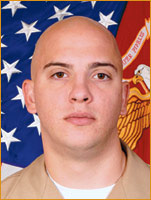
Cpl. Johnathan Hall
Cpl. Johnathan Hall organized a video collection drive for Marines at Walter Reed Army Medical Center and Bethesda Naval Hospital, and is now organizing a charity run he hopes will bring in $10,000 for the Marine Corps-Law Enforcement Foundation.
2006 Marine of the Year
notable
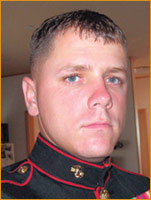
Staff Sgt. Clemente Gutierrez
Staff Sgt. Clemente Gutierrez, 27, transferred to Lubbock, Texas, to care for his wife after she was diagnosed with terminal cancer. He works full time at the Reserve unit, takes part in after-hours color guards and works another part-time job to support his wife.