
2016 Coastguardsman of the Year
notable
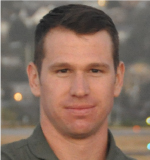
Aviation Survival Technician 2nd Class Darren Harrity
Aviation Survival Technician 2nd Class Darren Harrity became a Coast Guard hero for his super-human efforts during a harrowing rescue in July.
Four mariners were stuck in a stricken boat at night off the Oregon coast when the Coast Guard helicopter carrying Harrity arrived on scene. The rescue would be tricky. Five foot waves smashed the hull against rocks near a beach. Harrity, as rescue swimmer, was lowered down in the hoist. The mariners were in a life raft near the ship’s bow. In this difficult situation, the best means to rescue the mariners would demand a lot of Harrity.
One by one, he swam each of the men an eighth of mile to the shore, towing each through the heavy surf.
“With the seas and inky darkness, AST2 Harrity relied solely on the sound of the surf breaking against the shoreline to guide him in the correct direction,” wrote Lt. Zachary Wiest in Harrity’s nomination. “During each transit, AST2 Harrity fought rip currents, wood debris, clinging kelp beds that fouled his fins, and a surface covered in diesel to reach the shoreline.”
An hour later, all four mariners were safely ashore. Harrity had swam a mile, half of it while ferrying the men to shore.
Harrity is also a role model off duty. He’s volunteered at an animal shelter and visited schools to talk about service in the Coast Guard.
2016 Sailor of the Year
notable
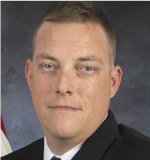
Chief Hospital Corpsman Shawn McCart
Chief Hospital Corpsman Shawn McCart wasn’t concerned with what uniform the man was wearing, as a “doc” he knew exactly what to do for a man suffering a heart attack.
In 2014, on a deployment to Georgia and Afghanistan, then-HM1 McCart was called to the scene of a Georgian soldier who had collapsed. Within seconds McCart saw the soldier wasn’t breathing and he couldn’t find a pulse. Then doc did what Navy docs do best: he saved the man’s life.
McCart set to work on the soldier, administering a defibrillator and performing an emergency surgery to insert a breathing tube into the man’s trachea.
McCart worked on the soldier for 45 minutes, reestablishing a pulse and stabilizing the man for follow-on care. McCart had saved his life.
He’s not just a hero overseas, McCart is a leader in his community. He volunteers as a flag-football coach for kids at the local YMCA and he has worked with the Big Brothers Big Sisters organization for the past 10 years.
On top of that, McCart makes time every year he’s not deployed to drive up to Arlington National Cemetery at Christmas time to lay wreaths at the graves.
“He even helped organize and lead the crowd, ensuring an orderly procession of events and that all graves were honored as intended,” said Master Chief Operations Specialist Derek Newell.
McCart is an inspiration on and off duty to fellow service members, Newell said.
“He has demonstrated the highest standards of personal conduct and moral character and is also known for motivating those around him to excel and grow personally and professionally,” Newell said.
2016 Soldier of the Year
notable

Staff Sgt. Guillermo Garcia-Galdamez
For Staff Sgt. Guillermo Garcia-Galdamez leadership isn’t measured in obedience, but dedication.
“His soldiers want to be like him. That’s the goal for every noncommissioned officer,” said 1st Sgt. Jeffrey Ladisic, who became his platoon sergeant in February 2014. “He’s the go-to guy for the whole squadron.”
Garcia-Galdamez, 24, was born in Reno, Nevada, and couldn’t wait to join the Army. He said he wanted to better the lives of people around the world. Also, his grandfather served in the Salvadoran Army and died during a civil war there, a spark that led Garcia-Galdamez to service.
After signing up through the Army’s early-entry program, he became a cavalry scout and currently serves in the 8th Squadron, 1st Cavalry Regiment, 2nd Stryker Brigade Combat Team at Joint Base Lewis McChord.
The soldier has designed a fitness program for his platoon, and he has them averaging 281 on the Army Physical Fitness test (he regularly surpasses 300). After being the first in his brigade to attend the Heavy Weapons Leaders Course (and excelling by being tabbed an honor graduate), he also developed a train-the-trainer Javelin (anti-tank missile) program to Maneuver Center of Excellence standards that’s been taken by more than 140 soldiers.
“Being a Stryker brigade, our most deadly weapon is a Javelin. We did not have nearly the number of personnel trained needed to be combat-effective,” Ladisic said.
Meanwhile, Garcia-Galdamez’s tactical knowledge enabled him to be one of only two soldiers out of a possible 65 to achieve Excellence in Armor. During the Army Reconnaissance Course he was awarded the Thurman Leadership Award for exemplifying what it means to lead. And he was picked to represent his division in the 2015 Gainey Cup (a biannual event for to name the best scout team).
Garcia-Galdamez also regularly helps soldiers study for promotion boards and enroll in college courses.
Ladasic cites his humility as another defining trait.
“He’s the best at everything he does, but you wouldn’t know it,” Ladisic said.
2016 Sailor of the Year
winner
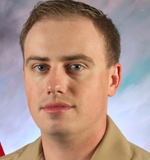
Hospital Corpsman 1st Class Samuel Johnson
Hospital Corpsman 2nd Class Samuel Johnson knows how hard it can be for veterans to return home from a war zone. After a difficult deployment to Afghanistan in 2014, he recognized that he was having trouble reforming connections with friends and family.
“I have a good group of friends and I’m really close to my family,” he said. “And when I got back from deployment I just wasn’t reestablishing the relationships I had. I was withdrawing and wasn’t being the healthiest person on earth. So I began to seek a change.”
He came across Team Red, White & Blue, an organization that creates a community among veterans and civilians through sports and social events. To his surprise, he found that the group didn’t have a big chapter in the Hampton Roads area.
So he got to work.
Johnson took leadership of the chapter, donning the trademark red shirts with the slogan, “enriching veterans’ lives” on the back and taking his small group to local events and 5K races around Hampton Roads. And as people came up to them and word spread, Johnson’s chapter grew. And it grew.
Today the Hampton Roads chapter he leads has more than 1,200 members, a mix of post-9/11 veterans, sailors and vets from other eras and even civilians who want to be involved. Johnson says he puts between 35 and 45 hours a week into Team Red, White & Blue, practically a full-time job.
And if leading a 1,200-person group in his off time wasn’t enough, he’s also a star at Navy Environmental and Preventative Medicine Unit 2, said HMC Thomas DeWitt.
“People want to emulate him,” DeWitt said.
2016 Sailor of the Year
notable
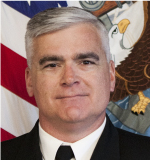
Cmd. Steven Macdonald
After a tour of duty in Iraq, Cmdr. Steven Macdonald decided he needed to get more involved in helping veterans.
Returning home, he began volunteering with the LEEK Hunting and Mountain Preserve, where volunteers help wounded veterans how to hunt and fish.
Starting as just a volunteer, he’s risen to a leadership role in the organization. What keeps him around is to see vets return during their rehab, multiple times in some cases, and to see them gradually recover as they regain the ability to do things their wounds initially prevented them from doing.
He also sees many recover from mental wounds as they rediscover the social dynamics most came to enjoy about the military.
“It’s amazing to see them come together and in no time at all, you see unit camaraderie developing and they switch from being wounded veterans and come together as a unit and team, joking among themselves and working together,” Macdonald said. “Yes, it’s focused around hunting — that’s our lane — but it’s not all about hunting and even if these folks don’t get a deer or a turkey, they have experiences and are able to rediscover things they may have thought lost — that’s what has kept me here for the past seven years.”
Macdonald’s service spans both the enlisted and officer ranks. He enlisted first in 1985 as a general detail seaman, but chance got him assigned to a medical command and after a two-year tour as a non-designated seaman, became a hospital corpsman, attending school in San Diego and rising to the rank if second class petty officer. He joined the Supply Corps through the reserves and was commissioned in 1996.
2016 Soldier of the Year
notable
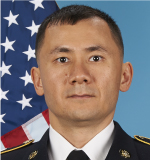
Sgt. Ryan Kanatbekoff
Based at Fort Meade, Maryland, Kanatbekoff instructs service members of all branches along with civilians at multiple levels of language learning. He’s developed courses in Russian. He also speaks Turkish, Ukrainian, Uzbek, Azerbaijani, Bulgarian and his native Kazakh. He’s earned several brigade-level awards for his performance as both a linguist and an instructor.
Soldiers aren’t the only ones benefitting from his mentorship. The 35-year-old was named Fort Meade’s active-duty Volunteer of the Year for 2015, primarily for his work with Sarah’s House, a program offering food, emergency shelter and other resources to needy families near Fort Meade.
He frequently tutors children through the program, even offering babysitting services. He’s organized fundraising and food-donation drives at Meade and pitched the program to other soldiers who’ve expressed interest in serving the community.
“We always take my kids to volunteer, and they ask me questions, like, ‘Why are we doing this? We can go do this or that?’” Kanatbekoff, 35, said. “And we always tell them, listen, some people are less fortunate. And we’re fortunate enough … to help them, to get them pointed in the right direction.”
He hasn’t always been in that position. Born in Kazakhstan, Kanatbekoff arrived in New York City in 2002 without enough money for a bus ticket to Wisconsin, where he’d landed a job offer. An old friend he met by chance at Penn Station lent him money for the trip; Kanatbekoff would eventually start a family, marrying his wife five days before she shipped off for basic training.
She left uniform to raise their family. Inspired by her service, Kanatbekoff joined in 2013, finally finding success after trying multiple recruiting offices.
Once in uniform, he surprised his fellow soldiers, and himself, with his aptitude for languages he hadn’t used in years.
“Apparently, I hadn’t forgotten them,” he said. “Everybody was really surprised how many languages I knew. … I guess whatever you learn, when you’re a kid, the fundamentals never leave you.”
Kanatbekoff's community service also includes greeting veterans arriving at Baltimore-Washington International Airport as part of Honor Flights to war memorials.
2016 Airman of the Year
winner
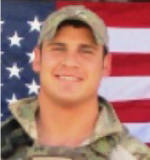
Staff Sgt. Clifford Crawford
For Staff Sgt. Clifford “Dylan” Crawford, the massive earthquake and aftershocks that struck Nepal last year resulted in what he describes as “the pararescue mission of the century.”
Crawford, a pararescueman, was in the middle of training exercises in the Philippines when the first 7.8-magnitude quake struck near Nepal’s Ghorka district on April 25, 2015. He said he was one of five airmen who immediately volunteered to go help. As the airmen were driving to the airfield to board two Ospreys, they got word that another major aftershock had hit.
They flew throughout Nepal, looking for signs of people who needed help, Crawford said. As they went into each village, or helped dig wounded Nepalese out of the rubble and examined the wounded who had been taken to a collection point. He then helped get them back to the helicopter and transport them to a hospital in Kathmandu for treatment. Crawford said he flew seven or eight trips to save people that first day.
In the days that followed, people would swarm Crawford’s helicopter as soon as it landed, looking for medical assistance. He triaged the wounded and decided which critical patients were most in need of immediate evacuation.
“I had patients all the way from very, very young, almost newborn, to extremely elderly,” Crawford said.
During the three weeks there, he helped save the lives of 44 Nepalese.
“To be that one guy on the ground, to go out and do mass casualties in the villages and help as many people as I could and get them to the best medical care that I possibly could, and also give them the treatment that they needed on the ground and in the helicopter, it was pretty incredible for me,” Crawford said.
Another tragedy struck May 12, 2015, when a helicopter carrying six Marines, two Nepalese soldiers and five injured civilians crashed on a steep mountainside in Nepal. Crawford, three other PJs, one combat rescue officer, and about 12 Nepalese rangers were sent to recover their bodies. Crawford said they searched for three days – all while continuing to medevac wounded quake victims – before finding the helicopter, and then stayed at the crash site for four days.
Conditions were harrowing. It was cold, foggy and rainy 12,000 feet up the mountain, Crawford said. Aftershocks kept coming, causing landslides while they tried to stabilize the crash site and get the remains out of a ravine, as well as recover sensitive items from the crash site. They also had to be constantly vigilant because of snow leopards in the area.
“We had to pull them out of the helicopter while also trying not to fall off the cliff,” Crawford said, who later helped guide the ramp ceremony for the fallen.
Crawford, who is stationed at Kadena Air Base in Okinawa, volunteers with Special Olympics, helping to build and tear down the facilities, and serving as an athlete buddy, assistant coach and cheerleader..
Crawford has volunteers at the emergency room of U.S. Naval Hospital Okinawa, he said, which helps keep his medical skills sharp. He also does landscaping and organizes performances at a home for elderly Japanese citizens on Okinawa.
2016 Marine of the Year
winner
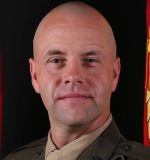
Marine Gunnery Sgt. Brian Downing
Gunnery Sgt. Brian Downing is a man who gets things done — and that has the earned him respect from subordinates and superiors alike.
Though a fast burner who made gunny in just 10 years and is now a semester away from a master’s degree, Downing's efforts are anything but self-serving. Unwilling to see his Marines live in dilapidated barracks, he tirelessly studied the supply system to figure out how to obtain materials needed to renovate 90 barracks rooms, common areas, and duty posts.
He took the same approach when outfitting his combined anti-armor team for an upcoming seven-month deployment with 1st Battalion, 6th Marines. The Iraq and Afghanistan veteran spent countless hours identifying, petitioning, and ultimately obtaining dozens of items most Marine only dream of having. He then rewrote standard operating procedures to accurately reflect current tactics with those technologies. Yet Downing’s greatest effort was invested in his 40 Marines. Each are well ahead of career milestones and have achieved multiple combat and job qualifications beyond Marine Corps requirements. As a team, they have proven themselves capable of numerous missions beyond the anti-armor assignment in predeployment workups.
Downing’s favorite form of community service is beach cleanup – and he even uses that work to help prepare his Marines for the unknown. In addition to arming himself with garbage bags and trash picks, Downing is known to check out combat metal detectors from the battalion supply warehouse. This enables him to recruit fellow volunteer Marines, who then practice combat formations and search techniques for improvised explosive devices as they work. Notable quote: Downing “lives by the Marine Corps motto of sustaining the transformation of each civilian into a service member and maintaining their personal improvement the entire time they are in the military,” said 1st Lt. Adam Levey, the combined anti-armor team’s commander. “There is not one facet of any of my Marines’ lives that Gunnery Sgt. Downing is not involved in. … Although Gunnery Sgt. Downing is technically my subordinate, I consider him to be the greatest mentor I have ever had.”
2016 Airman of the Year
notable

- Coming Soon
Coming soon.
2016 Soldier of the Year
winner
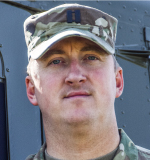
Capt. Zachariah Fike
Capt. Zachariah Fike is the founder of Purple Hearts Reunited, a non-profit group dedicated to returning lost medals and military keepsakes to veterans or their loved ones.
“I don’t sleep,” Fike said. “This is probably the busiest I’ve been in my career.”
Fike, a Purple Heart recipient who has deployed to Iraq and Afghanistan, started down this road after his 2006 tour in Iraq.
“I think any soldier who goes off to war changes as a person, whether they want to admit it or not,” he said. “People deal with stresses, or whatever you want to call it, differently. Some find sports or find hobbies or go fishing or hunting. I had a good friend who got me into antique hunting. I enjoyed looking for that lost treasure, if you will.”
In 2009, his mother gifted him a Purple Heart she found at an antique shop.
“As soon as I opened it, of course I knew what it was, but I knew right away that it wasn’t meant for me,” said Fike, who researched the medal and eventually returned it to the descendants of the proper owner, a WWII vet who died in combat in 1944.
Since then, Purple Hearts Reunited has returned more than 200 medals to veterans or their surviving family members, and the group receives three to five medals in the mail every week.
Fike’s goal for the coming year is to return the approximately 100 World War I medals he’s received by April 2017, in time to mark the 100th anniversary of that war.
The medals “are not just a piece of metal,” Fike said. “Yes, it’s a symbol, but for a lot of these families, it’s the last tangible item they’ve ever received from their loved one. It actually brings closure to a lot of these families’ lives.”
Maj. Robert Monette said it’s “a calling” for Fike. “He feels very strongly that the soldiers’ service and ultimate sacrifice, in many instances, should not be forgotten,” he said.
So far, Fike has done most of the work that goes into researching a veteran, tracking down their families and organizing a return ceremony. But he’s been building a network of volunteers to help him keep up with the overwhelming number of medals and mementos Purple Hearts Reunited receives in the mail.
For his day job, Fike works full time as the officer strength manager for the Vermont National Guard’s recruiting and retention battalion. He also commands the company responsible for Officer Candidate School in the state’s Regional Training Institute. And the husband and father of two young children is enrolled in the information operations course as part of his Intermediate Level Education