
2012 Soldier of the Year
honorable
SGT Matthew Rutkowski
Rugged on the outside but with a big heart, Rutkowski inspires soldiers.He displayed his tough side by diving in turbulent waters off the coast of Georgia last summer and rescuing a soldier’s spouse who lost consciousness in a swell.
But it is not just Rutkowski’s daring that motivated fellow soldiers to nominate him for Army Times Soldier of the Year. It’s his compassion.
He helped “countless” soldiers through difficult times in 2011, guiding soldiers through divorces and money problems and even talking down one from suicide, his nominators wrote.
“SGT Ski always has time for any soldier, whether they belong to him or not. I’ve never seen him turn someone away,” Spc. Bradley Burnum wrote in nominating Rutkowski. Those actions haven’t gone unnoticed. Last year’s staff sergeant promotion board picked him up as soon as he was eligible, and his leadership selected him over peers for a job slotted for a soldier of higher rank. His battalion also named him noncommissioned officer of the month in May for outstanding performance.
His good deeds in 2011 didn’t end with the Army. Rutkowski volunteered at his local fire department, helped set up a new church and organized a Thanksgiving |dinner for the Boys and Girls Club of America.
In November, Rutkowksi, originally of Wilmington, Del., even suited up for the All-Army rugby team at the Armed Forces Championship at Fort Benning, Ga.
“No one NCO has inspired me to be a soldier more than him,” Burnum wrote.
2012 Soldier of the Year
honorable
SPC Darien Tate
Tate, a former pro football player and schoolteacher for seven years, enlisted in 2011 to fight for his country with courage but has surged through the ranks embodying another Army value: selflessness.At initial infantry training, drill sergeants selected Tate as a platoon guide, and he spent 16 weeks mentoring younger fellow recruits.
Company leaders at Fort Hood, Texas, immediately noticed the new soldier’s potential and charged Tate with upkeep of the nuclear, biological and chemical equipment room. Soon after, Tate was promoted to infantry rifle team leader, a role normally reserved for sergeants.
As a soldier, Tate applied many skills he honed while helping found and teach at an inner-city school, the Chicago Math and Science Academy.
“He is a natural-born leader, an extraordinary teacher and a true mentor to all those around him,” wrote Capt. Kevin Beasley, Tate’s company commander, in nominating the specialist for Army Times Soldier of the Year.
Off duty, Tate volunteered at the Cedar Valley Elementary School in Killeen and assisted a family readiness group with preparing barracks rooms in anticipation of soldiers redeploying from combat zones.
Tate built kitchens and sports fields in Haiti and visited orphanages and cooked meals for villagers in the Dominican Republic during trips through his church.
Despite that, he still made time for athletics, playing on a regimental basketball team. “He is the epitome of what the core values of the military stand for,” said friend Cynthia Miles in her nomination.
2012 Soldier of the Year
winner
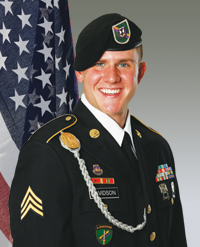
SGT Steven Davidson
Pursuing a degree in hospitality management from the University of North Texas in Denton; plays on the rugby club; and volunteers at his former high school.Sgt. Steven Davidson has been in the Army less than three years, but he has already deployed to Africa, helped save a fellow soldier’s life and, as an E-4, served in a job typically reserved for a staff sergeant.
Davidson also is a mentor to a local middle-schooler, speaks to high school students about staying in school and against bullying, and hopes in the coming year to connect members of his university rugby team with students at the local middle schools.
For his initiative, maturity and passion for giving back to his community, Davidson is the 2012 Army Times Soldier of the Year.
“It really means a lot to me,” Davidson said of being selected. “I want to be an example for my soldiers. And if people see soldiers are out there making a difference, maybe they’ll get out there, too.”
Davidson, 21, is a member of the 490th Civil Affairs Battalion in Grand Prairie, Texas. He initially signed up for the active Army to be a combat medic but decided he wanted to go to college, so he opted instead for the Army Reserve.
His desire to give back to his community was sparked in 2009, when one of his classes during senior year in high school paired him with a third-grader named Josiah Greene. When the peer-assisted leadership class ended, Davidson said he didn’t want to stop being Greene’s “big brother.”
“The impact I have on him, and him on me, is outstanding,” Davidson said. So he continued to mentor and hang out with Greene, and he had lunch with Greene and his classmates once a week.
The two kept in touch when Davidson went to basic training and later when he deployed to Djibouti, in the Horn of Africa.
“Soldiers ... are looked up to by youth,” Davidson said. “Children admire someone in uniform, and my biggest concern is students and youth going the wrong way. I feel it’s my obligation to give back. I have such a passion for being a well-rounded soldier, serving overseas and at home.”
Davidson deployed to Djibouti in June 2011, after training for about a month at Joint Base McGuire-Dix-Lakehurst, N.J. Davidson and his fellow soldiers re-deployed from Djibouti in April.
As a human resources specialist, Davidson worked in the S-1 shop and immediately impressed his officer in charge, said Maj. Edward Palacios, the battalion executive officer.
“She came to me and she’s like, ‘Wow, this Spc. Davidson is awesome,’” Palacios said. “I said, ‘How so?’ She said he … took the initiative, he wrote his very own mission statement talking about the things he wanted to accomplish on this deployment. It was really way above his paygrade. Heck, I don’t know any officers who do anything like that. I was really impressed with that.”
Davidson proved so reliable that when the S-1 noncommissioned officer in charge was re-deployed early, about halfway through the deployment, he was put in her job.
“He was still an E-4,” Palacios said. “He stood up and he filled an E-6 billet and he did a tremendous job. He didn’t have the experience an E-6 would have, but he was the kind of person who recognized where he was deficient in experience and he would go and do the research and find out what needed to be done.”
In September, Davidson and other soldiers participated in the French-run desert warfare course.
It was 120 degrees, and the soldiers were on the final march at the end of the intense 10-day course. The soldiers had already marched “close to 100 miles” by that point in the course, Palacios said.
“The heat was unbearable,” he said.
About nine hours into the march, the instructors kept saying, “One more mile, one more mile,” Davidson said, as the soldiers tried to conserve what little water they had left. Suddenly, a call rang out from the front of the line.
A fellow American was seizing and suffering from heatstroke.
“I grabbed my ruck and went up there,” Davidson said. “He was a big guy, and I could feel the heat coming off him.”
Davidson quickly took charge. He grabbed his scissors, started cutting off the master sergeant’s boots, and quickly ordered others to cut off the soldier’s uniform.
Davidson poured the last of his water on the seizing soldier, and he and a Marine captain stayed with the patient for two hours until he could be evacuated.
“We were all convinced it was too late,” Davidson said. “But he pulled through.” Palacios said, “By all accounts, had Sgt. Davidson not taken the initiative, it’s entirely possible this master sergeant would have died or been permanently injured. He recognized the danger of the situation right away. He proved himself so well.” Davidson shrugs off the compliments.
“I was just doing what anyone else would have done,” he said. “I didn’t think anything of it because it was muscle memory.”
Home plans
He still visits his high school and Greene’s school, and he has big plans this fall when he resumes classes at the University of North Texas.
An avid rugby player, Davidson hopes to link the university’s rugby team with the local middle schools.
“My goal is to … get them connected so they can be positive role models for the kids,” he said. “Children need positive mentors. They need to see people who aren’t much older than them who want to make a difference.”
Davidson said part of his desire to connect with kids stems from his parents’ divorce when he was in high school.
“I didn’t have an older brother or older friends,” he said. “I knew how at-risk I was. I decided I don’t want any student to have to go through that. If I can impact one student, and one student can impact me, it’s more than I could ask for.”
As for the future, Davidson said he’s still trying to figure it all out.
His chain of command was so impressed with him that they nominated him for an appointment to West Point, Palacios said.
“I’m not trying to champion him because he’s from my unit,” Palacios said. “It’s because he impressed me so much. He’s just one of these people that comes across rarely.” Davidson said he’s considering becoming an officer, and he doesn’t want to let down his commanders, but he’s still undecided.
“I really like dealing with soldiers, being an NCO,” he said. “Right now, this is where I need to be. I love soldiers.”
2012 Sailor of the Year
honorable
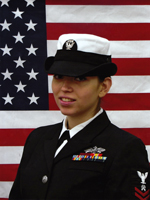
LS2 SCW Angelina Colon-Franceschi
Married, mother of two boys with a daughter on the way.Logistics Specialist 2nd Class (SCW) Angelina Colon-Franceschi had a big year in 2011. She returned aboard the destroyer Mahan after a support role in Operation Unified Protector, the NATO support mission in Libya. She also earned a promotion to petty officer second class.
But it’s her off-duty efforts that have really made a difference. With help from her husband, Giovanni, she wrote, illustrated and published a children’s book titled “Mommy the Sailor,” which tells the story of a female sailor’s deployment through the voice of her children.
In 2011, she donated 100 copies of her book to child development centers in the Hampton Roads, Va., area. All sales from her book are being donated to nonprofit organizations, such as the Children’s Hospital of the King’s Daughters. Her commanding officer, Cmdr. Mark Nicholson, described Colon-Francheschi as a “good sailor who is involved in her community.” .
In other charity efforts, she raised nearly $1,100 |worth of new and used toys for homeless children, and |collected food for a food bank and clothes for the Salvation Army.
2012 Sailor of the Year
winner
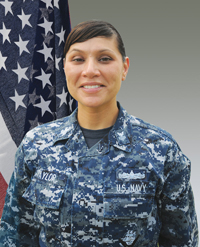
HM1(SW) Maria Decena-Taylor
Comes from a family of corpsmen including her sister, father and husband. Joined the Navy in 1993. One daughter.During a brief tour of the naval hospital here, one detail about the giant facility is clear: Hospital Corpsman 1st Class (SW) Maria Decena-Taylor is very well-known. In the 10 minutes it took for her to lead this reporter from the center’s front door to her small office, the sailor was stopped nine times.
Sure, details of work are important. But Decena-Taylor also asks about her co-workers’ families, their hobbies — things that come up when you truly know the people you work with.
As the leading petty officer for the Directorate of Nursing Services at Naval Medical Center Portsmouth, Decena-Taylor leads more than 450 sailors who help care for more than 15,000 patients annually.
For her stellar track record, as well as setting a positive example on duty and off, Decena-Taylor has been named the 2012 Navy Times Sailor of the Year. Besides Portsmouth, she’s also served in Yokosuka, Japan; Newport, R.I.; the now-decommissioned frigate Peterson and Expeditionary Medical Facility Kuwait, where she was the director and leading petty officer for clinical services.
Her command master chief in Kuwait said she “expertly” led 32 sailors in six clinics and provided 100 percent patient satisfaction.
And in the last five years, she’s been selected for Sailor of the Quarter five times; she was the Senior Sailor of the Year at Portsmouth, as well.
Her duties at Portsmouth include the usual things an HM1 would do, such as administrative matters and providing medical care during a crunch. But among her most important roles is serving as the first boss to scores of fledgling sailors fresh out of medical training. It’s their first job out of school, and Decena-Taylor is the first boss to show the new corpsmen the nuances of patient care and the responsibilities of life outside the schoolhouse.
“You’re their leader,” she said. “You’re their surrogate mother.” Decena-Taylor said a sailor’s first leader is one they always remember, so she wants to set a positive example.
“They’re going to compare you to every leader that comes after you,” she said. She added that it’s important to develop relationships with them, too, so she can help them keep their lives in order and forge stronger careers.
It was her ability to make a |solid first impression, and her exceptional ability to communicate with people, that brought her to her current job, said Decena-Taylor’s supervisor, Senior Chief Hospital Corpsman (SW/AW) Kimberly Coore. The two have known each other since recruit training, Coore said, and Decena-Taylor was concerned about her sailors from the beginning.
Coore remembers one incident 19 years ago at the now-closed Recruit Training Center Orlando.
Coore had done something to get in trouble with her commanders, and that meant she had to do pushups. Two hours went by before she rejoined the recruits with throbbing arms.
“As soon as it was over, [Decena-Taylor] was the first one to come in and console me,” Coore said.
Decena-Taylor wanted to know if she was OK, and she helped tend to Coore’s exhausted arms.
It was this ability to relate to others — but also push them to do better — that led Coore to bring Decena-Taylor on staff from another position at Portsmouth.
“I needed someone who had that intrusive leadership,” Coore said.
‘She kicked my butt’
HM2 Robert Payne was one of those who benefitted from Decena-Taylor’s style. He first met her in 2006, when he was a brand-new sailor out of field medicine school and she was one of his bosses.
“She didn’t yell at us, she just laughed,” Payne said. “She’s always smiling, well-groomed, greets you wherever you are. I can’t say I’ve ever seen her mad.” It was a good first job, he said, and after filling other billets, including a deployment with Marines and time spent on ship, he’s back in Portsmouth.
Payne admits when he returned to Portsmouth, he was kind of in a rut professionally and wasn’t doing much to get out of it. He requested to work for Decena-Taylor again, and that request was granted.
He’s very clear about how she treated him.
“She kicked my butt,” Payne said.
Before, he said, he wouldn’t study for his advancement exams or take his professional development too seriously, even though he knew he should.
“You know, HM1 has done a lot for me; I owe it to her,” he said.
He kept poring over thick binders of study material Decena-Taylor had made for him, took his exam and advanced to HM2.
“When the results came out, it was so sweet,” Decena-Taylor said. “That was the first time he hugged me in six years.”
From Goose Creek, S.C., Decena-Taylor, 37, comes from a family of corpsmen. Her husband, HM1 (SW/AW) Sajata Taylor, also works at Portsmouth, in a different area of the hospital. Her father, Eduardo Decena, is a retired chief hospital corpsman, and her younger sister, HM1 (SW) Kristina Decena, serves aboard the amphibious transport dock New York.
Outside of the hospital, Decena-Taylor’s regularly found ways to get corpsmen involved in their communities while sharpening their skills as medical care providers. For example, she led 50 volunteers in providing medical coverage in the 2011 Oceana Air Show and 23 volunteers for a suicide prevention walk. She said these events show corpsmen not only how to work together, but also how to work with people in need. Decena-Taylor’s time left in the Navy may be short. She’s up for chief, but if she isn’t selected, she’s on her way out. It’s always been her dream, she said, to make that rank. The names are expected to come out by the end of July.
Her father, a retired corpsman, did it, and he continues to serve as inspiration. “My father … told me at the beginning of my career to treat people with respect, show sailors that I am loyal to them, and to always do what is right, regardless of who is or is not looking,” Decena-Taylor said.
And if she’s selected, she already knows that her dad, the retired HMC, will affix her new pins.
“I hope to make it,” she said. “I’m not ready to leave the fight yet. I’ve wanted that for my whole career.”
2012 Sailor of the Year
honorable
YNC (SW/AW) Antonio Franklin
In 2011, Franklin spent more than 100 hours coaching youth baseball.Chief Yeoman (SW/AW) Antonio Franklin spent 2011 in Washington, D.C., where he served as secretariat leading chief petty officer for the deputy chief of naval operations for manpower, personnel, training and education.
Franklin is a “deck-plate superstar” who “leads, mentors, challenges, counsels and delivers results,” reads a nomination letter — one of several touting the chief yeoman’s leadership skills.
Another nominator wrote that “the dozen, hand-picked petty officers that he led daily are future [chief petty officers] thanks to this inspiring leader.” While in D.C., Franklin served as president of the Pentagon Area Chief Petty Officer’s Association.
He benefitted his community by coaching a youth baseball team and serving as a Big Brother for the Big Brothers Big Sisters program. He also fed homeless vets at Washington’s Christ House.
To wrap up 2011, Franklin graduated from the Senior Enlisted Academy. He kicked off 2012 by moving to a new assignment as a personnel officer for Naval Forces Central Command in Bahrain, and he is set to be commissioned as a warrant officer in October.
2012 Airman of the Year
winner
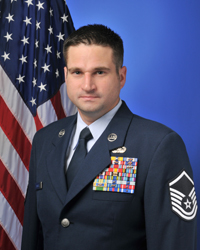
Master Sergeant Brandon Lambert
Single; hometown is Rome, N.Y.KEESLER AIR FORCE BASE, MISS. — While deployed to Kandahar Airfield, Afghanistan, then-Tech. Sgt. Brandon Lambert and his squadron helped move wounded troops into hospitals and onto medical aircraft bound for Germany.
The experience gave Lambert, who was serving as a maintenance superintendant with the 73rd Expeditionary Air Control Squadron, an idea for a volunteer project: He started a penny-a-pushup fundraiser for the Wounded Warrior Project.
“We were seeing wounded warriors every day coming through, so that was an organization that we picked to sponsor,” said Lambert, who pinned on master sergeant in April.
The fundraiser soon spread beyond Kandahar, to another base in Afghanistan, then to another in southwest Asia and eventually to Eglin Air Force Base, Fla., where troops raised more than $4,500 for the Wounded Warrior Project by doing thousands of pushups and collecting money from their sponsors.
While at home at Eglin, Lambert has helped collect and deliver more than 7,000 pounds of food per month to feed those in need. He also spends countless hours raising money for the American Cancer Society’s Relay for Life and works with local Veterans of Foreign Wars posts and AMVETS groups to highlight veterans’ struggles with PTSD. But it’s not just the hours spent on volunteer work that make Lambert Air Force Times’ 2012 Airman of the Year. His supervisors say he is a quiet leader who sets the bar high for his airmen and even higher for himself.
“I enjoy fighting for this country. I enjoy the training; I volunteer for a lot of deployments,” Lambert said. “I’ve always been on the go, and it’s kind of one of those things that I strive for.”
Born into the Air Force
Lambert was born into the Air Force. His father was a career airman stationed in Italy when he was born, and the family spent the next 12 years living in Italy, Greece, Germany and Spain. He said the lure of overseas assignments prompted him to follow in his father’s footsteps after finishing high school in 1997.
In his 15-year career, Lambert worked in maintenance before moving into air control, where he now serves as the digital maintenance supervisor with the 728th Air Control Squadron at Eglin.
He calls Rome, N.Y., his home but said he is rarely in one place for more than a few months.
“In my career, I’ve been at Salt Lake City, Korea, Italy, Guam, England and Florida,” Lambert said.
He has deployed six times to the Middle East, returning in January from a six-month stay in Kandahar, where he was a maintenance flight chief. While deployed, he oversaw more than 30,000 maintenance actions for six work centers that had $60 million in equipment assets.
Service overseas, stateside During the most recent deployment, Lambert stepped up to not only volunteer, but also to lead. He volunteered to be the first sergeant for 52 airmen in the field after serving as an assistant first sergeant. In this role, he tried to help the airmen through a deployment that stretched through the holidays.
“I was trying to boost people’s morale while in an environment like that,” Lambert said. As first sergeant, he coordinated five emergency leaves, set up parties and volunteer activities to keep morale up, and helped put together holiday parties and events such as Wii bowling tournaments and poker games. The leadership was surprising for his rank at the time, said Lt. Col. Jon Rhone, the commander of the 728th Air Control Squadron. “Even before he pinned on master sergeant, as a tech. sergeant, he was leading NCOs at our site in Kandahar,” Rhone said. “He led 50 to 55 people in the middle of a combat zone; that is an amazing feat for a tech. sergeant.”
Rhone said he would gladly have Lambert on his team on the next deployment. “He is a quiet leader. He leads by example and has pretty exacting standards. And the NCOs know what those standards are,” he said. “The best thing about him is he holds himself to those standards.”
Lambert called up his calming presence to help two airmen who survived a near-miss rocket blast at Kandahar. The airmen, who had driven a truck to the exchange on base, were returning to the truck as alarms sounded. An explosion 10 feet behind the truck shattered its back window.
“Luckily, they were safe — nobody got hurt,” Lambert said. He made sure the airmen were evaluated and called in a chaplain to help them recover from the shock of what had happened.
Back stateside, Lambert served as adjutant for the VFW near Hurlburt and “adopted” a RED HORSE squadron, hosting a barbecue for 240 squadron members and coordinating gifts for those who were deployed. He also co-organized a fishing event aimed at educating people on post-tramatic stress disorder, which drew more than 600 local veterans.
Lambert “epitomizes service before self,” wrote his supervisor, Maj. Danielle Folsom.
On the move For now, Lambert is in advanced communications training at Keesler Air Force Base, Miss., before moving on to more training at Hurlburt.
He has already completed eight leadership courses and two joint service leadership seminars. He has received recognition as a top NCO throughout his career and was named NCO of the Year and USO Service Member of the Year in 2011 as a technical sergeant with the 552nd Air Control Group at Tinker Air Force Base, Okla., and was nominated for the Spirit of Bob Hope Award.
The Air Force has changed a lot in the 15 years since he enlisted, Lambert said. It’s a different mindset, he said, and the service is doing a lot more with fewer people. But the combination of service to his country and other airmen, and the travel, are keeping him focused on his career in the Air Force.
“There are places I’ve been to that most people haven’t gone to,” he said. Last fall, he traveled more than one passport would allow and had to turn it in because it was full of stamps.
Now he has a new passport for wherever his service takes him next.
2012 Airman of the Year
honorable
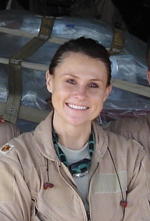
Maj Kathryn Reese-Hudock
Married to Brian Hudock. She volunteered during local animal shelter’s fundraiser. Hometown is Riverside, Calif.Maj. Kathryn Reese-Hudock has been the only hope for wounded troops looking squarely into the face of death.
She has served on eight missions with a team that moves troops with severe lung injuries from Afghanistan to Germany. All of her patients, who would have died if they hadn’t been evacuated, survived the trip.
“We constantly have well-known trauma surgeons who come and work at Landstuhl to see what we’re doing as well as to provide their expertise, and several of them have said that some of these patients they would not take down for [a] CT scan of the head or the body, and yet we manage to put them on a plane and [take] care of them,” she said. During the long flights back to Germany, the patients require constant attention.
“These soldiers, airmen, Marines, they are a part of our family, and so when you get down there, all you want to do is take the necessary steps in treatment to keep them alive and get them back to Landstuhl alive and then eventually get them back to [the U.S.] to see their families,” she said. “That’s what we keep our minds focused on.” Reese-Hudock is deployed to Ramstein Air Base, from where she flies every week to the U.S. with critically ill patients, said Col. Barbara Jefts, chief of nursing administration at Landstuhl Regional Medical Center.
“I’d trust her to take care of me, and there’s not much higher praise than that,” Jefts said.
2012 Airman of the Year
honorable
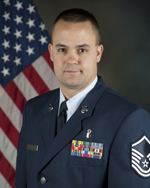
MSgt Joseph Brownell
Married to Ann Brownell.Master Sgt. Joseph Brownell has rescued 24 people since being assigned as a medic to Fairchild Air Force Base, Wash., in 2008.
Brownell belongs to the 336th Training Support Squadron. His main job is to serve as a medic for the survival, evasion, resistance and escape school, but he is also frequently called by civilian law enforcement to rescue people in Idaho, Montana, Washington and Oregon. .
He spent close to 4,000 hours on call in 2011, and on one occasion last fall, he rescued nine people in one day. First, he was lowered 240 feet from a helicopter to rescue a hunter, but his work was far from over.
“Some [members] of the local search-and-rescue team — maybe shouldn’t have been out searching for other people — because they were all stranded now,” he said. “So at this time, it was about 9 o’clock at night, we had to go back and rescue the would-be rescuers. We got eight more.”
That was a unit record for the number of people saved in one mission, said Maj. Arthur Miller, commander of Brownell’s medical flight. Brownell also has the most saves of anyone who has ever served in the flight.
Brownell is an expert on medical issues, flying and the search-and-rescue mission, Miller said.
“He really is a kind of perpetual student of learning,” Miller said. “He’s always trying to learn something new, so he’s always delving into [Air Force Instructions] or reading up stuff. So he’s just very, very knowledgeable about how to do his job extremely well.”
2012 Marine of the Year
winner
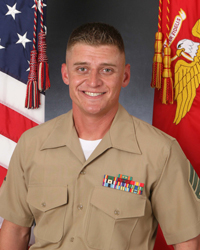
Staff Sergeant Jessie McDonald
McDonald is an active community volunteer and is working toward a bachelor’s degree in construction management, married with one stepdaughter.MARINE CORPS AUXILIARY LANDING FIELD BOGUE, N.C. — Staff Sgt. Jessie McDonald is only a few years older than some of the Marines he supervises, but one lance corporal who looks up to him already knows it’s McDonald’s leadership style he intends to emulate when the time comes to assume such responsibility.
That’s high praise — coming from a lance corporal.
McDonald, 28, is a drafting and surveying chief with Marine Wing Support Squadron 271 here. He and his Marines work closely with the Corps’ combat engineers, often teaming on construction projects, and he makes it a point to cross-train everyone to the extent possible so the two military occupational specialties can function cohesively and get the job done quickly. If that means one of his guys picks up a jackhammer to knock out part of a runway project, so be it.
“He gets in and does the same stuff that we do,” said Lance Cpl. Kenneth Storvick, one of the combat engineers working alongside McDonald here in June. “[And] there’s stuff about drafting and surveying that I never even knew was possible that I’ve learned from him.”
McDonald’s superiors and contemporaries describe the Ohio native as the perfect role model — one his junior Marines admire, respect and gravitate toward. It’s for this reason that McDonald is the 2012 Marine Corps Times Marine of the Year.
Before his transfer to North Carolina last year, McDonald spent three years at Fort Leonard Wood, Mo., as an instructor in the Technical Engineer Specialist Course, which teaches the trade to junior troops from all of the military services. As a Marine on an Army base, his presence was noticed in more ways than one. For instance, when McDonald was tasked with getting the Marines on base involved in the Better Opportunities for Single Soldiers program, it took only a few meetings for him to realize the organization could do better. And with the help of another instructor from the Air Force, they set out to change things.
“When I got there, they were just doing card games at the library once every two weeks,” McDonald said. “Right then and there we decided, ‘This is not going to work for us. We can raise money, we’re going to turn this program into something worthwhile and get more people involved.’”
Within a year, they increased regular attendance from fewer than 10 to more than 100, taking overnight snowboarding trips, dinner cruises on Lake of the Ozarks, and trips to concerts and ballgames.
He also served as barracks manager for the Marines at Fort Leonard Wood — and took the role seriously, seeing that Marines had a comfortable place to live, whether that meant making sure they had fresh linens or working toilets.
McDonald continues to help the Single Marines Program at nearby Marine Corps Air Station Cherry Point, N.C. — and he encourages others to pitch in.
“It’s the individual morale of that Marine that matters because it’s not only going to affect his disposition, but the amount of training he sucks up if he’s disgruntled and upset all the time,” McDonald said.
Filling that big brother role earned his Marines’ respect. He’s been described as tough but fair, and that goes a long way, Storvick said.
“He sets the example by correcting people and making sure they do the right things,” he said. “The first day we met him, we had a uniform inspection and he ran it. It was a good way to meet him because he did that and then said: ‘I’m Staff Sgt. McDonald. Nice to meet all of you.’”
McDonald pushes his Marines to get off base and into the community for volunteer work. He said it’s important that local civilians see the Marines are around to help. He organized a group to help set up and take down tents during a fundraising event for the local fire department.
“We were out there till almost 2300 both nights, setting up and tearing down for them,” McDonald said. “But that’s what they needed, and we didn’t have any hesitation going out there because we knew we were supporting a good cause.” While in Missouri, he volunteered for an animal shelter, building kennels and saving the organization $1,500. McDonald also received a certificate of appreciation from the mayor of St. Robert, Mo., for his work building a pedestrian bridge and nearly 1,000 feet of walking trail, saving the city thousands of dollars and providing a cool outdoor space for local residents.
Asked how he developed his leadership style, McDonald said he has tried to pull one trait from all of the leaders he’s admired over the years. He adds his personal brand of humor to relate to Marines, and sometimes to impart a lesson. A private first class, for instance, recently told McDonald he bought a washer and dryer from Rent-A-Center for around $1,200.
“After we got done making fun of him for being a dummy, we showed him a website where you can buy a used set for about $400,” he said. “We talked to him to see if he needed a truck [and] helped him get the cheaper washer and dryer and return the expensive one so they weren’t paying a fortune for something that shouldn’t cost so much.
“I’ve been in their shoes,” he added, “and I’ve learned a couple of things. I want my Marines to know they can come and talk to me.”