2021 Veteran of the Year
winner
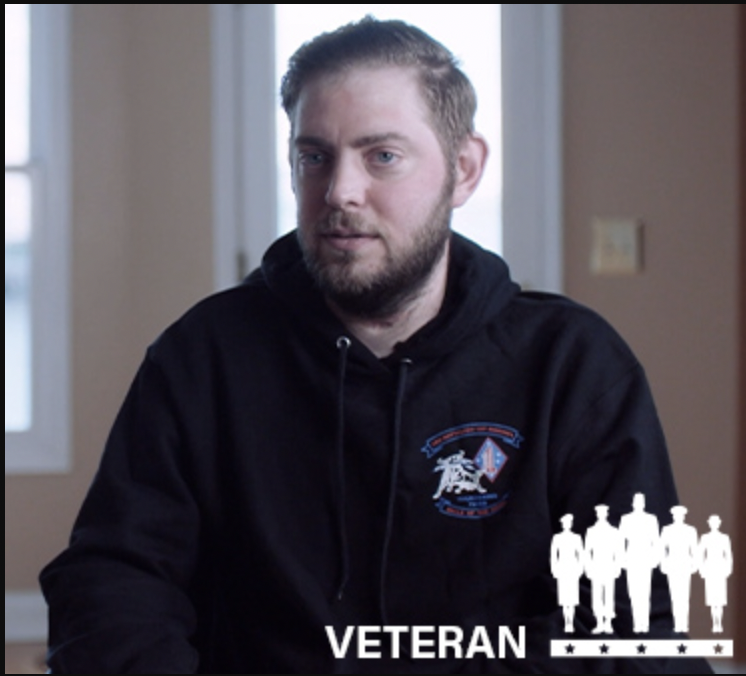
Veteran John Peck
https://www.militarytimes.com/military-honor/smoy/2021/08/25/despite-catastrophic-injury-veteran-of-the-year-john-peck-has-persevered-and-inspired/ Marine Corps veteran John Peck knows that no one is asking him to do more for his country, especially after he lost all of his limbs in a roadside bomb blast in Afghanistan more than a decade ago. But he still feels like he has more to give. “If there’s something that I can do for my fellow brothers and sisters, then I want to do it,” he said. “I’ve always wanted to help. If I share my story, if I can talk about being suicidal and how I got through that, maybe it can help.” Peck, who is being honored as Military Times Veteran of the Year for 2021, is known in the military community not just for the horror of his severe combat injuries but also for the resilience he has shown since. He has written a book on his experiences and worked as a motivational speaker, sharing intimate details of his physical pain, bouts of depression and frustration trying to adjust to life with two transplanted arms. Now Peck, 35, is looking to do more. He’s looking at taking classes to help provide financial assistance to other veterans — “often, when veterans are thinking about suicide, finances are the number one stresser” — and looking for groups he could partner with to reach out on veterans mental health issues. “I don’t love the spotlight,” he said. “I try to stay out of it as much as possible, which is weird, given all the attention on me. “But if I can do my part and help other veterans, that’s cool.” A catastrophic injury Peck’s first set of severe injuries came in Iraq in 2007, while he was serving as a mortarman. A roadside bomb blast left him with traumatic brain injuries that erased much of his memory, and took several years of therapy to repair. But he did recover enough to return to military duty, and to redeploy with his fellow Marines in 2010. Less than a month into that tour, he stepped on another improvised explosive device, this time with even more catastrophic results. Peck lost both legs and an arm in the blast, which left him in a medical coma for three months. He lost his remaining limb to infection not long after regaining consciousness. Retired Marine Sgt. John Peck, Military Times' 2021 Veteran of the Year, wrote an autobiography, “Rebuilding Sergeant Peck: How I Put Body and Soul Back Together After Afghanistan.” (Courtesy of John Peck) Quadruple amputees are rare, in large part because any single injury that results in the loss of a limb is life-threatening. Only five individuals from the wars in Iraq and Afghanistan have been publicly identified as surviving that level of trauma. For Peck, the injuries not only meant the loss of independence but also the end of his first marriage and a new fight with depression. “There was no epiphany when I woke up and thought, ‘oh, I don’t feel like killing myself anymore,’” he said. “There were small things, moments that helped pull me back through. “I remember being on the seventh floor at Walter Reed [Army Medical Center] and looking through my window at another [amputee] veteran sitting at the bus stop. And I was thinking, ‘He’s gonna throw himself in front of a bus.’ “But instead this woman and little girl come up and grab his hand, and they all walk away. And I remember thinking, ‘If this guy can find love and have a family, maybe so can I.’” So, he put in the work of learning how to use a wheelchair and take care of himself as best he could. He met a woman and started dating. He received a rare double arm transplant in 2016. Every month, he has to return to military doctors to undergo treatments designed to prevent his body from rejecting the new limbs. Today, Peck is remarried and assembling computers in his free time, testing his fine motor skills in what he admits can be a frustrating challenge. “It takes a lot of patience, and I get frustrated quite frequently,” he said. “If I can’t do something, I just try and chill out for a minute. I just step back, look at it all and remember to stay calm.” Finding new purpose Two years ago, Peck chronicled all of the ups and downs in the autobiography “Rebuilding Sergeant Peck: How I Put Body and Soul Back Together After Afghanistan.” In it, he said the goal in sharing some of the worst moments of his life were to help others make their own lives better. “Through it all, I’ve emerged as a stronger and more empathetic human being — truly rebuilt, including my new arms,” he wrote. “I want readers to know that things will always get better, to have faith, and to try to have a sense of humor about it all. “If I can achieve my goals with all that I’ve been through, anyone can.” He’s shared that same message in front of large crowds and even during a visit with then-President Donald Trump in 2019. But he still doesn’t see himself as much of a public speaker. “The thing is, I can’t fake emotions in front of a crowd,” he said. “You can see exactly what is going on with me at any time on my face. If it’s a bad day, you can see me frustrated. If I’m happy, I can’t make myself seem sad, even if I’m talking about sad things.” That’s pushed him to focus on smaller, more meaningful interactions with fellow veterans. He has been dabbling in politics with a group of fellow New Jersey veterans on social media of late, sharing ideas in a provocative but also civil manner. A portion of his speaking income and book sales is set aside for veterans charities. He’s looked into organizations where he could serve as a mentor or advocate, but also notes he has no interest in launching another new foundation. “There are thousands out there already.” Peck just wants to find some way to keep helping others. “I look bad sometimes and think about how awful Sept. 11 [2001] was … but also how great Sept. 12 was,” he said. “People came together. And we’ve seen that after hurricanes and other tragedies. “That’s the thing we all need to get back to. We need to actually lend a hand to each other. And I still want to be the one to do that.”2021 Coastguardsman of the Year
winner
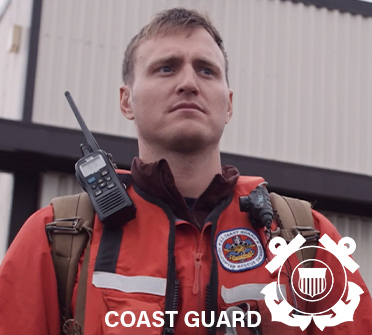
AST2 Trevor Salt
https://www.navytimes.com/military-honor/smoy/2021/08/25/this-coast-guardsman-helped-save-the-lives-of-two-hikers/ The best part about being in the Coast Guard is having the opportunity to rescue people, according to Aviation Survival Technician 1 Trevor Salt. “Being able to save a life, help someone out in a bad situation — that’s definitely the most rewarding,” Salt told Military Times. Salt, 33, had the opportunity to do just that in January 2021, when he provided assistance to two hikers — including one who had suffered a severe fall — on Grayback Mountain in Oregon. According to his supervisor, the hikers would have almost certainly died had they not received help that night from Salt, who was an AST2 at the time. Coast Guard Aviation Survival Technician 1 Trevor Salt provided life-saving assistance to two hikers, including one who had been seriously injured in a fall, in the mountains of Oregon. He is Military Times' 2021 Coast Guardsman of the Year. (Weston Scott/Staff) For Salt, it was a completely new experience — and one that forced him to rely on all the training he had received as an aviation survival technician. “I’d never stayed the night out on the mountain and had to use all the training that I’ve gone through for like survival schools, and building a shelter, and then providing prolonged field care,” Salt said. “So that was definitely the first time I had ever done something like that.” Salt had just wrapped up a training flight in January, when Coast Guard Sector North Bend received an emergency call about hikers who were stuck in the mountains and required medical attention. Since the National Guard was unable to assist until the morning, Salt said the next step was to come up with various plans that the his commanding officer could sign off on so they could launch later that night. Going into the night, the plan was to drop some hypothermic capsules to the hikers to keep them warm — and see if the helicopter was powerful enough, given the altitude, to hover and allow Salt to descend onto the mountain. Salt brought an EMT kit, a patient care monitor, along with his personal bag, totaling approximately 150 pounds of gear, he said. Salt said he was hoisted down onto the mountain and headed to the injured, female hiker in her 40s approximately 100 feet away from him with ground crampons on his feet. Although the report initially said that woman had fallen approximately 50 feet and had a potential back injury, Salt said situations often are different upon arrival to the scene. “When you’re flying out to go to a case your mind is just going through every possibility that you can think of...like injuries and you’re always thinking worst-case scenario,” Salt said. “And then once you get on scene it’s usually always completely different.” As a result, Salt said he was very caught off guard when he learned she had actually fallen approximately 1,200 feet. But he found her oriented times four, a term used to describe a patient who knows their name, time, location, and why they are receiving help. “She was alert and oriented times four, which going into a trauma patient, that’s really good news to have someone alert and oriented times four,” Salt said. “That means their brain’s still working, they still know what’s going on.” Salt conducted an assessment of the injured hiker, bandaged up several lacerations on her head, and placed her in a C-collar before putting her in one of the hypothermic capsules, which are essentially large sleeping bags with access points for continued treatment. After splinting the arm of the injured hiker and placing her in another hypothermic capsule, Salt then started leveling out the snow so there was a working area and room for a shelter. “So I put up a tarp across two trees down to the ground, and basically created a wind block from the wind,” he said. “And I made a little shelter for all three of us.” Throughout the night, Salt said he kept the injured hiker awake and helped reposition her to alleviate pain. Staying overnight was necessary because the Coast Guard’s MH-65 Dolphin helicopter is not powerful enough to hoist a person up in a litter, another person in a basket, plus an aviation survival technician. That meant they needed to wait until the National Guard could come evacuate them in a more powerful aircraft. In the morning, Salt then leveled a hoisting platform, and also cleared a roughly 80-foot long pathway with the other hiker so the injured hiker could evacuate the scene in a litter. Salt said he arrived on the mountain at approximately 11 p.m., and it wasn’t until about noon the next day that the National Guard arrived in an H-60 rescue helicopter. “We definitely needed that 60 to be able to hoist all three of us out safely,” Salt said. Although Salt has not had contact with the hikers he assisted, he said he has talked to the National Guard medic, who said the female hiker remained in the hospital for a week for fractured vertebrae, scapula, and some other minor injuries. Salt has since been promoted to AST1, and he said his efforts to rescue the hikers played a role in the promotion. He also said he is aware that he has been written up for an award for his actions, but he isn’t sure which one at this time. However, he said he has been selected for the Armed Services YMCA of the United States’ Angels of the Battlefield award, which is given to enlisted medical professionals from each branch of the military annually. For other Coast Guardsmen who find themselves in a similar crisis, he recommends relying on one’s training to get through the situation. “Just be ready and trained for worst-case scenario stuff,” Salt said. “You may think it’s never going to happen to you, but there’s always that possibility that you’re going to do everything that you’ve trained for.” “Trust your training and stick with your training and your knowledge...training is really what you fall back on,” he said.2021 Airman of the Year
winner
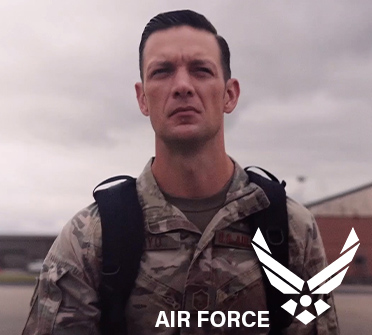
Senior Master Sgt. Jeremy Mayo
https://www.airforcetimes.com/military-honor/smoy/2021/08/25/special-ops-continued-despite-covid-19-this-airman-devised-a-way-to-keep-aircrew-virus-free/ Repurposing a chemical and biological contamination tent to protect troops from the coronavirus earned Senior Master Sgt. Jeremy Mayo Military Times’ 2021 Airman of the Year award. Mayo, the 352nd Special Operations Support Squadron’s operations superintendent at RAF Mildenhall in England, has served in the Air Force for nearly two decades. But 2020 put his years of experience and leadership to the test with missions that don’t stop for a pandemic. The Arkansas native enlisted in the Air Force in 2002. Though he admired the travel and deployments of the loadmasters he knew, he appeared headed for a career in munitions instead. Then, as luck would have it, he found a way into the air mobility field through a connection on his brother’s baseball team. “One of the kids on there, his dad was the guy who divvied up the jobs at [the Military Entrance Processing Station],” Mayo said. A loadmaster job became available, and the man approached Mayo’s father: “He’s like, ‘Hey, does your son want it? He leaves in two weeks,” Mayo recalled. Mayo’s first flight was his trip to basic military training. He started out working for Air Mobility Command but wanted something more from his Air Force career. Special operations appealed to him for its life on the road, unpredictability and opportunities to work with elite groups from across the military. So far, he’s flown missions including refueling, resupply and infiltration and exfiltration on the MC-130H Combat Talon II, MC-130J Commando II and the now-retired MC-130P Combat Shadow. His current squadron “provides direct support to unified and theater commands in response to U.S. Special Operations Command Europe tasks by orchestrating current operations, planning, weapons and tactics, aircrew training, weather, mobility, intelligence, operational medicine and other abilities throughout Europe and Africa,” according to the Defense Department. This is his second assignment at Mildenhall, serving first from November 2010 to November 2014 and then returning in August 2018. He’s also been stationed at his hometown installation of Little Rock Air Force Base, Arkansas; Hurlburt Field and Eglin AFB, Florida; and as an instructor at Kirtland AFB, New Mexico. Air Force Senior Master Sgt. Jeremy Mayo adapted the chemical aircrew survivability barrier, a tent-like, air-filtering structure for C-130 airframes, for use in the COVID era. He is Military Times' 2021 Airman of the Year. (Air Force) He was finishing a senior leadership course for career enlisted aviators in Texas in March 2020 while COVID-19 swept through Europe. As the virus gained a foothold in the United States, the course was cut short, and Mayo headed home to a squadron that looked drastically different than the one he left. Airmen were split into different shifts that wouldn’t overlap to avoid spreading the virus throughout the squadron. Mayo was one of a few mission-essential workers who came into the empty office each day. “We were pretty tight — did a lot of things together, people always interacted,” he said of the 67th Special Operations Squadron, his unit at the time. “To see people go their own ways and try and stay in touch as much as possible, it was just a very odd time.” Mayo said Col. Clay Freeman, the former 352nd Special Operations Wing commander, mentioned that the Air Force may already have a weapon against COVID-19: the chemical aircrew survivability barrier, a tent-like, air-filtering structure for C-130 airframes. Testing showed the contraption could let airmen transport an ill passenger away from the battlefield without endangering the crew’s health. Mayo recognized its pandemic-era value and helped come up with the plans for how airmen would use the system. “Individuals who get contaminated, we can isolate them,” he said. “Then the [medical] team … can take care of them, and we can get them back.”2021 Sailor of the Year
winner
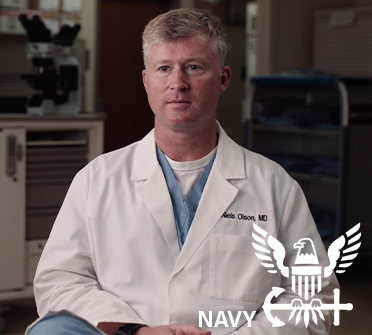
Navy Cmdr. Niels Niels Olson
https://www.navytimes.com/military-honor/smoy/2021/08/25/this-sailor-ran-covid-testing-on-guam-for-the-uss-teddy-roosevelt-and-changed-how-the-navy-dealt-with-the-virus/ Were it not for Navy Cmdr. Niels Olson, the Navy’s response to last year’s COVID-19 outbreak aboard the aircraft carrier Theodore Roosevelt could have been much more difficult. The soft-spoken pathologist ran Naval Base Guam’s testing laboratory during the chaotic spring and summer months of 2020, when roughly a quarter of TR’s crew caught the coronavirus and the ship sought safe harbor on the island to get its crew healthy again before continuing deployment. Without the molecular lab that Olson oversaw there, and a data expertise that helped test and track TR sailors there before eventually getting them back onto the ship and out to sea, the task might have been extra daunting at a time of already substantial and evolving difficulty. Olson’s leadership and his team’s work showcases how critical behind-the-scenes logistics can be in such a situation. “Preparation is incredibly important,” the Nebraska native told Navy Times. “I didn’t know COVID was coming, but I started getting molecular diagnostics set up in Guam three months before I got sent there, back in 2018.” Cmdr. Niels Olson, Military Times' 2021 Sailor of the Year, ran Naval Base Guam's testing lab during the highly publicized COVID-19 outbreak on the aircraft carrier Theodore Roosevelt in spring 2020. (Courtesy of Niels Olson) Without that molecular lab to process COVID tests, which he initially stood up for dengue fever testing, things might have gone different. “I kind of wonder if they would’ve sent [TR] somewhere else if we didn’t have a molecular capability in Guam,” Olson added. Olson deferred any praise for his efforts in helping the Navy respond to its biggest COVID outbreak and instead praised the men and women under his command in the lab. “All my sailors knew what to do,” the 45-year-old married father of two said. “They knew why they were doing it and they didn’t need any extra motivation. They took care of the problem, I just happened to be the guy in the office.” Olson left Guam late last summer and is now assigned to the Defense Innovation Unit in California. He recalled seeing the COVID stormfront approaching in early 2020 and he soon realize the lab he had stoop up would be well-suited for any battle against the novel coronavirus. Olson began specialized training for his team by February of last year and soon realized that COVID was going to be a problem. “This is the thing we’ve all been waiting for,” he said. “There was no version of events where I was not going to do everything I could to prepare.” Throughout the first part of 2020, Olson made sure he was sufficiently supplied to process all the polymerase chain reaction, or PCR, tests the Navy needed to test TR sailors on Guam. The PCR test, performed by sticking a long swab deep into a patient’s nose, detects genetic material from viruses. “I knew all the things I needed to order, getting them to Guam was going to be the hard problem,” he said. “There’s no backup on the island. You can’t just call the ICU doc in north Philadelphia and drive down to south Philadelphia. There’s two ICU docs on the whole island.” Without the molecular lab to process COVID tests on Guam, which Cmdr. Niels Olson initially stood up for dengue fever testing, things might have gone different for the TR's crew. (Photo courtesy Niels Olson) As the stricken TR pulled in, questions arose about testing processes and where sailors would stay when they were moved off ship. “All these things start coming out real fast,” Olson recalled. “You put 5,000 people on an island…you’ve just increased the population of the island by a measurable percentage.” He soon was contacted by the Defense Digital Service, a Pentagon department full of software developers, engineers and data scientists. Data would be critical to understanding the TR infections, and Olson worked with DDS in fast-tracking a secure website which contained a survey for quarantined sailors, where they could fill out a questionnaire regarding symptoms and other matters each day. This allowed teams to cross reference survey data and testing data. In such an environment, ensuring data is uniformly collected was paramount, he recalled. “The data we set up in that survey, we intentionally and concretely made sure it was well-structured data,” Olson said. “Everyone was going to get the same questions. Make sure your data looks the same.” At one point, Olson’s lab team was running tests for 1,000 sailors a day before they could return to the ship, a process that required two negative tests in a row, separated by four days. To top it all off, Olson was supposed to be leaving Guam in July, but the lab work pushed that departure off by a month. He also was instrumental in a U.S. Centers for Disease Control and Prevention study of TR infections, which gave the scientific world a better understanding of the disease. Olson said he eschewed any big rallying pep talks with his sailors and instead just tried to lead by example. “I was in early and out late,” he recalled. “Everybody knew. You didn’t need any messaging.” “We run the lab,” he added. “Congratulations, we have a big lab problem. This is what you signed up for. Get after it.”2021 Marine of the Year
winner
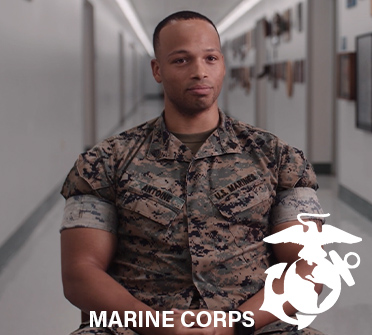
Sgt. Brandon Antoine
https://www.marinecorpstimes.com/news/your-marine-corps/2021/08/25/the-2021-marine-of-the-year-helped-save-a-suicidal-marine-from-jumping-to-his-death/ In the early morning of June 16, 2018, Sgt. Brandon Antoine was rushed out of his Okinawa, Japan, barracks room as Marines ran through the halls carrying mattresses. Antoine said he first thought base police were in the barracks doing a surprise inspection, but when he was told to take bring his mattress outside into the rainstorm he was simply confused. “There were a lot Marines banging on doors, getting mattresses outside,” Antoine said. Happening to like his mattress and not wanting it to get wet, the Marine, then a corporal, walked outside the barracks to see the cause of the commotion: It was a drunk Marine threatening to throw himself off a fourth deck air duct. But Antoine’s quick actions that night kept the drunk Marine from jumping to his death. For his heroism, Antoine was awarded the Navy and Marine Corps Medal, the service’s highest noncombat award for heroism, and has been announced as Military Times’ 2021 Marine of the Year. Standing outside in the rain, Antoine saw the drunk Marine, “hanging belly side down,” on an air duct. “I saw they didn’t need any more mattresses, so I went to go see if anyone was trying to get the Marine … to aid him so he did not slip in fall,” Antoine said. The drunk Marine had accessed the air duct through a fourth deck bathroom and had locked the door behind him. When Antoine arrived on the scene, he saw two or three Marines trying to pry the door open. “I told them, ‘Just pry it open get it cracked then I am going to kick it,’” Antoine said. Soon, Antoine and the other Marines had broken into the bathroom. Antoine then climbed onto the wet and slippery air duct to hold onto the Marine threatening to jump. Two Marines who made it into the bathroom held onto Antoine to make sure he did not fall during the rescue. “I just held out there until the fire department came,” Antoine said. After around 15 minutes the on-base fire department arrived with a ladder and safely removed the drunk Marine from the roof. “It was a whole battalion effort, everybody was there doing something I was just the one holding the Marine,” Antoine added. ‘I’m not trying to prove myself’ Antoine was born in New Orleans but moved to Atlanta in 2005 after Hurricane Katrina destroyed large portions of his home city. Growing up, competition was instilled in the young Marine, who played of football for the Etowah High School Eagles in Woodstock, Georgia. “I’m not trying to prove myself to anyone, I’m just trying to compete,” he said. One day, when nearing high school graduation, Antoine said he heard a voice from God telling him to serve his country. Within a week, Antoine went to the nearest recruiting office, unsure of which branch he would join ― until he saw the Marine recruiters. “They were the loudest at the station, they were all in their dress blues,” Antoine told Marine Corps Times. Shortly after introductions, the Marine recruiters challenged Antoine to a pushup competition. Sgt. Brandon Antoine, Military Times’ 2021 Marine of the Year, has been awarded the Navy and Marine Corps Medal, the service’s highest noncombat award for heroism. (Weston Scott/Staff) From then on, Antoine only had eyes for the Corps. In 2014 he signed a communications contract, attempting to get boot camp as fast as possible. Though the career choice was almost an after-thought to the idea of being a Marine, Antoine fell in love with his job as an 0621-field radio operator. That love was cemented when Antoine arrived at his first unit: the 7th Marine Regiment based out of the Marine Corps Air Ground Combat Center Twentynine Palms, California. “I love the real-world scenario,” Antoine said. “I enjoyed working with snipers and grunts, going to their (integrated training exercises) and doing exercises with the other nations who come to Camp Wilson,” he added. The infantry unit gave him plenty of opportunities to ply his trade in a realistic training environment and resulted in his first deployment to Kuwait in 2016 as part of Operation New Dawn, according to Capt. Benjamin Yoder, a spokesman for the 3rd Marine Division. Still in love with the Corps after his first four years was up, Antoine enlisted and requested to go to the 3rd Marine Division in Okinawa, Japan looking for more professional development. It was not long after he arrived that he found himself in front of his Camp Courtney, Okinawa, Japan, barracks watching a Marine threaten to kill himself. ‘It’s definitely a shared thing’ When Antoine first heard he was going to be awarded the Navy and Marine Corps Medal for his actions that night, he tried to refuse it. “I honestly tried to deny it in any way that I could,” Antoine told Marine Corps Times. He asked his command if the unit could be awarded in his stead, but was told no. “It is definitely a shared thing with my name attached to it,” he added. Antoine said the same about his selection as Marine of the Year. “It brings recognition to everybody else who was there that night,” Antoine said of the award. That humility echoed how Antoine talked about his time in the Marine Corps where he judged his success not on personal accomplishment, but in the development of those he is in charge of. “I honestly do it for the Marines below me,” Antoine said. “My pride comes from their development.” Antoine has already re-enlisted for a third time and is preparing to head to North Carolina. Ultimately, he hopes to retire as a master gunnery sergeant after a long career in the Marine Corps. “I want to stay in the Marine Corps as long as the Marine Corps allows us to continue our relationship,” Antoine said.2021 Soldier of the Year
winner